
Why Metallic Powder Coatings Shift Color Between Batches—And How Bonding Solves It
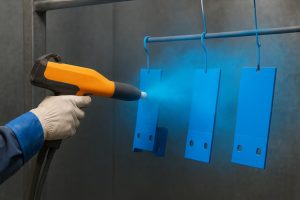
Anyone who has sprayed metallic powder coatings on architectural aluminum, lighting housings, or display fixtures knows the headache: two panels coated from the same box end up looking slightly warmer, darker, or less sparkly when placed side by side under daylight.
Unlike solid RAL colors where pigment is dispersed evenly inside every resin particle, metallic finishes rely on tiny aluminum flakes, mica platelets, or interference pigments. How those metallic flakes attach to the base powder—and how your line handles them—decides whether a facade project looks seamless or patchy.
Dry-Blend vs. Bonded Metallics: Where Consistency Starts
At the manufacturing stage, metallic powders are made in two main ways, and they behave very differently on a production line:
-
Dry-blended metallics: Metallic flakes are mechanically mixed into finished base powder after grinding. It keeps costs down, yet free metallic flakes carry different mass and electrical charge characteristics than resin particles. During spraying, flakes and resin separate in the hopper, hoses, and electrostatic field.
-
Bonded metallics: Through controlled thermal and mechanical processing, metallic flakes are physically fixed onto the surface of the base resin particles without melting the powder into clumps. Because flake and resin travel together as one unit, transfer efficiency stays far more uniform across the part and across shifts.
If a shop tries to reclaim and reuse overspray from a dry-blend metallic, the reclaim hopper rapidly enriches or depletes in metallic flake—causing obvious shade drift within hours. Bonded metallics tolerate controlled reclaim far better and keep metallic distribution steady across complex profiles.
Four Line Variables That Trigger Metallic Shade Drift
Even with a well-bonded metallic powder, small changes in application habits alter how flakes orient inside the molten film:
-
Gun voltage and charging current: Metallic flakes are conductive. Running high kilovolts (70–90 kV) can cause flakes to stand upright or bounce off grounded metal, making the finish look duller or gray instead of bright and directional. Dropping voltage into a gentler 45–65 kV window often improves flake laydown.
-
Fluidizing air and powder feed rate: Over-fluidizing the hopper separates heavier metallic particles from lighter resin fines. Keep fluidizing air just high enough to produce a smooth, gentle boil—never a turbulent fountain.
-
Gun-to-part distance and spray angle: Changing gun distance from 150 mm to 280 mm shifts both electrostatic charge and impact velocity. On multi-gun automatic booths, inconsistent reciprocator alignment creates visible striping down long extrusions.
-
Film thickness variation: Translucent or mica-rich metallic formulations rely partly on basecoat-to-flake optical depth. A panel sprayed at 55 μm will not match an adjacent panel sprayed at 95 μm.
Grounding and Hose Hygiene Matter More With Metallics
Free or poorly bonded metallic flakes gradually build up inside feed hoses, Venturi pumps, and gun deflectors. That conductive buildup distorts charge delivery and can suddenly spit small dark clusters onto clean workpieces.
Dedicated hoses for metallic runs, scheduled Venturi cleaning, and strict earth-ground checks on booth frames prevent both visual defects and erratic charge behavior.
What to Ask Before Ordering a Metallic Powder Batch
When sourcing metallic finishes for architectural or multi-batch commercial runs, price per kilogram tells only half the story. Before locking in a supplier, confirm:
-
Is the formulation thermally bonded or dry-blended? (Crucial if you use automatic booths or reclaim systems.)
-
Does the finish require a clear topcoat? Certain bright chrome-effect or brass metallics need a UV-stable clear polyester coat to prevent oxidation and hand-mark staining outdoors.
-
What is the batch-to-batch ΔE tolerance and viewing angle standard? Metallic shades shift with light angle, so suppliers should inspect panels under multi-angle colorimeters rather than single-angle solid-color readers.

 D5 Creation